Yorkshire Water: Stop the Self Scrutiny. Stop the Effluent Discharge. Prosecute the Directors
"The most effective way to stop an undesirable activity is to eliminate its profitability"
Tom Cone - 2024
The experimental privatisation of water companies must end.
Start with Yorkshire Water
Seven ways to Prosecute the Directors for their Negligence
Yorkshire Water is in fact, a part of Kelda Group a Private Investment Consortium:
Yorkshire Water is primarily owned by international investors, with over half owned by Hong Kong investment firms, over a third owned by the Singapore government, and the remainder owned by an Australian pension scheme:
Yorkshire Water is ultimately owned (through a complex series of holding companies) by Kelda Holdings, incorporated in Jersey.
As of 2010 water is recognised as a Fundamental Human Right
Recognising water as a human right places obligations on Governments to:
- Respect:
Refrain from interfering with people's access to water - Protect:
Prevent third parties from interfering with people's access to water - Fulfill:
Take positive steps to facilitate access to water
The Privatised Water Companies have been allowed to self manage and the greed, avarice, and inhuman conduct of Management, CEOs, and Shareholders is a disgusting disgrace that has been allowed to run unchallenged by CONservative and Labour Governments
CLick Here to see: An overview of the status of water as a human right and the implications
Click Here to see: Water Company's profits, dividends, and bonuses scandal
Privatisation
The privatisation of water companies in England and Wales was introduced by Margaret Thatcher's Conservative government in 1989.
Here are the key details:
- The process was implemented rapidly after the Conservative Party won the 1987 general election.
- The Water Act of 1989 enacted privatisation, separating the functions of providing water and sewerage services from monitoring discharge into water systems.
- Ten regional water authorities were privatised and transformed into privately-owned water and sewerage companies.
- The newly created private companies paid £7.6 billion for the regional water authorities.
- At the same time, the government assumed £5 billion of the sector's debts and granted the companies an additional £1.5 billion in public funds, referred to as a "green dowry".
- Three new regulatory bodies were created to oversee the privatised industry:
the Drinking Water Inspectorate,
the National Rivers Authority (now the Environment Agency),
and Ofwat
Self Monitoring
The practice of self-monitoring by water companies in England was introduced by the Labour government in 2009. This system, known as operator self-monitoring, allowed water companies to essentially "mark their own homework" by conducting their own testing and reporting on pollution and sewage discharge.
Key points about the introduction of self-monitoring:
- It replaced the previous system where Environment Agency officials carried out all testing of treatment works and sewage discharges.
- Under this system, water companies became responsible for monitoring their own treated effluent and raw sewage releases via storm overflows.
- The change occurred during a period of significant budget cuts to the Environment Agency, which led to the agency relinquishing its monitoring role.
- The self-monitoring system has been in place for over a decade, spanning multiple governments
Yorkshire Water pollution incidents:
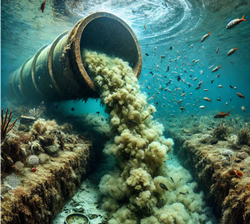
Yorkshire Water has been involved in several pollution incidents affecting the region's rivers and waterways. In recent years, the company has faced significant criticism and regulatory action due to the high levels of untreated sewage being discharged into rivers such as the River Wharfe, the River Nidd, and the River Calder.
In 2023 alone, Yorkshire Water was responsible for over 500,000 hours of sewage spills, with most incidents not caused by exceptional rainfall but by inadequate hydraulic capacity and maintenance issues. This means that the sewer systems are often overwhelmed by normal wastewater flows combined with typical rainfall, leading to frequent overflows of untreated sewage??.
Here is a chronological list of notable incidents and scandalous activities involving Yorkshire Water:
-
August 2013: A major pollution incident occurred when Yorkshire Water discharged sewage into the River Ouse near York due to a pump failure at the Naburn treatment works. The company was fined £1.1 million in April 2016 for this incident?.
-
March 27, 2017: A valve failure at the Balby Sewage Treatment Works led to the discharge of sewage sludge into a tributary of the Mother Drain, affecting the Potteric Carr Nature Reserve. This incident resulted in a fine of £150,000 in September 2021?.
-
August 2017: Yorkshire Water identified issues with the George Street detention tank in Bradford. Despite knowing the risks, insufficient urgency in addressing the problems led to an unlawful discharge into a local beck, resulting in a £1.6 million fine.
-
2020: Yorkshire Water increased its pollution incidents from 125 in 2020 to 143 in 2021, with serious pollution incidents rising by over 65%?
-
May 2023: Yorkshire Water issued a public apology for failing to tackle storm overflows adequately, leading to frequent sewage discharges into rivers such as the Wharfe, Calder, and Aire.
-
2023: The company was responsible for over 500,000 hours of sewage spills, with only a small fraction attributed to exceptional rainfall. The majority were due to hydraulic capacity issues and inadequate maintenance.
Seven ways to Prosecute the Directors for their Negligence