

How To Get the Disenfranchised to Vote
"The most effective way to start a desirable activity
is to provide a meaningful reward"
Tom Cone - 2024
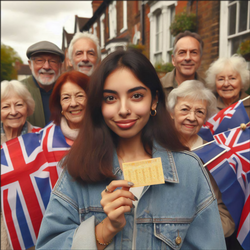
Democracy in UK is at a crisis point: When the turnout of voters is so low that it does not represent the people
- Voter apathy: Many feel their vote doesn't make a difference
- Lack of political knowledge
- Distrust in politicians
- Practical barriers (e.g., complex registration processes, accessibility issues)
- Insufficient civic education
The "Legacy Media" is encouraging and enabling Political Parties to whip up a storm where Migrants, Refugees, and Immigrants are being vilified and abused.
The 'State Owned' BBC is even allowing racism to enter the Public Debate, which is a very slippery slope
The UK faces significant challenges in encouraging voter participation, with declining turnout rates in recent decades highlighting a growing disengagement from the electoral process. Several factors contribute to this issue:
- Voter apathy:
Many people feel their vote doesn't make a difference, especially in safe seats where the outcome seems predetermined. - Lack of political knowledge:
Some individuals feel uninformed about political issues and candidates, leading to reluctance to participate. - Distrust in politicians:
Scandals and broken promises have eroded faith in the political system. - Demographic disparities:
Certain groups, such as young people, ethnic minorities, and those in lower socioeconomic brackets, consistently show lower registration and turnout rates. - Practical barriers:
Issues like complex registration processes, polling station accessibility, and work commitments can hinder participation. - Insufficient civic education:
Many people lack a strong understanding of the political system and the importance of voting.
Despite these challenges, increasing voter turnout is crucial for several reasons:
- Democratic legitimacy:
Higher participation strengthens the mandate of elected officials and the overall democratic process. - Representation:
When more people vote, elected officials are more likely to represent a broader range of societal interests. - Policy impact:
Increased turnout can influence policy decisions, as politicians become more accountable to a larger, more diverse electorate. - Social cohesion:
Voting fosters a sense of civic duty and community engagement. - Long-term engagement:
Regular voting habits can lead to sustained political participation and awareness.
While addressing these challenges requires a multi-faceted approach, including improved civic education, simplifying registration processes, increasing accessibility, and fostering trust in the political system a Kick start is needed to turn the tide
A Voters Lottery
Introducing a National Voters Lottery could significantly increase turnout while maintaining political neutrality."This innovative approach aims to boost civic participation without favoring any particular party or ideology. The National Voters Lottery would reward the act of voting itself, rather than influencing the choice made at the ballot box. By offering a chance at a substantial prize to all who cast their vote, regardless of their political leanings, this system could motivate a broader cross-section of the electorate to engage in the democratic process.
The lottery's non-partisan nature ensures that it doesn't skew the political landscape but instead focuses on increasing overall participation.
This approach would be particularly effective in encouraging turnout among demographics that have historically been less likely to vote, thereby enhancing the representativeness of election results.
By emphasizing the importance of the democratic act itself, rather than its outcome, a National Voters Lottery could reinvigorate public interest in the electoral process and strengthen the foundations of participatory democracy
UK Investment in Democracy
The cost of running the 2024 UK general election is likely to be between £170 million and £185 million.
I propose a fraction of this investment is applied to a National Voters Lottery. In fact, less than 1 tenth of the National Cost in running the General Election
Lottery Fund and Prizes:
Version 1
Constituency Structure:
Total prize fund: £6.5 million
(£10,000 per constituency)
- 650 Constituency Prizes: £5,000 each
- One winner drawn from each constituency's voters
- 13 Regional Prizes: £50,000 each
- One for each of the 9 English regions, plus Scotland, Wales, Northern Ireland, and overseas voters
- 1 National Grand Prize: £1 million
This structure ensures every constituency has a winner, encouraging local participation, while larger regional and national prizes add excitement.
Version 2
Tiered national structure:
Total prize fund: £10 million
- 1,000 Bronze Prizes: £1,000 each
- 100 Silver Prizes: £10,000 each
- 10 Gold Prizes: £100,000 each
- 1 Platinum Grand Prize: £1 million
This version offers more chances to win, with graduated prize levels to appeal to different motivations.
Running the Lottery:
For both versions, the following would be adopted
- Winners would be randomly selected from all verified voters.
- The lottery would be conducted and administered by a professional independent agent, such as the National Lottery or Post Code Lottery, to ensure fairness and transparency.
- Prizes would be tax-free to maximize the incentive.
- Any unclaimed prizes could be rolled over to the next election or donated to civic education initiatives.
These structures aim to boost turnout across all demographics and regions without influencing voting choices, thereby enhancing democratic participation while maintaining electoral integrity.
------
More Notes on the Britain's Broken Democracy
- Declining turnout: Voter turnout in the UK has decreased over the past decades and remains below that of post-war general elections up to 1992. The average turnout for the six general elections since 2000 has been just under 65%, meaning about one-third of the electorate regularly fails to participate.
- Demographic disparities: Certain groups are consistently less likely to vote, including:
- Young people
- Ethnic minorities
- Those in lower socioeconomic brackets
- People with disabilities
- Uneven representation: The 2014 European Social Survey found that in Britain:
- Under 35s were more than twice as likely to abstain as over 55s
- Those in the bottom income quintile were more than twice as likely to abstain as those in the top
- Only 11% of over 55s in the top income quintile failed to vote, compared to 73% of under 35s in the bottom quintile
- Skewed electorate: The overall result is an electorate that skews notably older, wealthier, whiter, and more educated than the makeup of the population as a whole.
- Policy implications: This uneven representation can lead to policy decisions that favor those who vote more frequently. For example, a 2013 study found that after the 2010 general election, voters faced cuts amounting to 12% of their annual household income, while non-voters faced cuts averaging 20%.
- Distrust in the system: Only 6% of people believe voters have the most powerful influence on government decision-making, with around half (53%) saying that party donors, businesses, or lobby groups wield the greatest power.
- Disengagement from democracy: Recent polling found that 26% of 18-34 year olds say democracy is a bad way to run a country, while over 60% express support for "a strong leader who does not have to bother with parliament and elections".
These factors combine to create a situation where the democratic process is not fully representative of the population, potentially leading to policy decisions that do not reflect the needs and desires of all segments of society.
This uneven representation and participation pose a significant challenge to the legitimacy and effectiveness of the democratic system in the UK.